
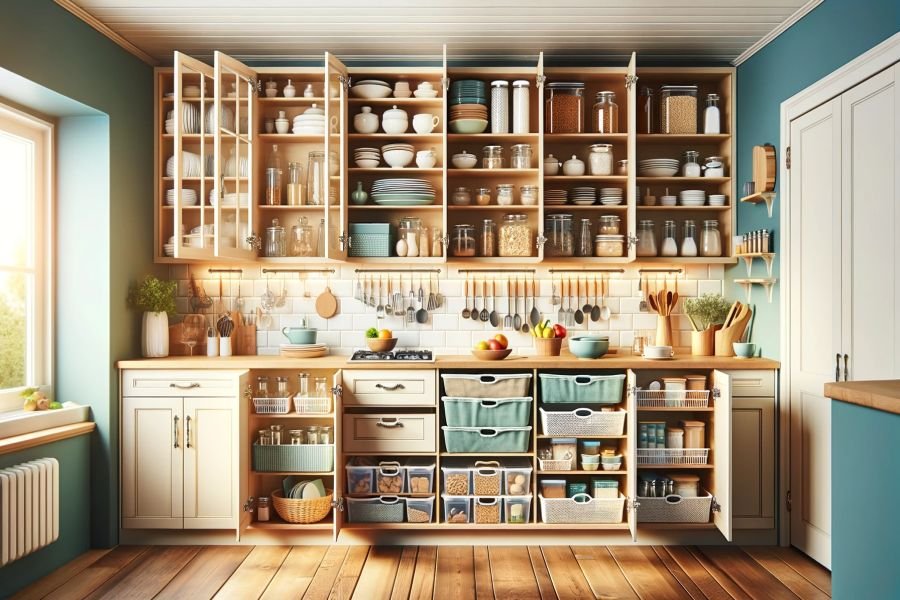
Do your kitchen cabinets look like an episode of Hoarders? Are you wasting time rummaging around to find what you need? If so, it’s time to get organized. Keeping your kitchen cabinets neatly arranged not only saves time but also reduces stress.
In this article, we’ll explore tips and tricks to transform your chaotic cabinets into a functional, clutter-free kitchen.
Introduction
The kitchen is the heart of the home. This busy space brings the family together for meals and memories. However, a cluttered and disorganized kitchen makes cooking and finding needed items a frustrating chore. Who wants to desperately dig through piles of pots and pans when cooking dinner after a long workday?
Organizing your kitchen cabinets helps create a functional workspace and relaxing environment. Everything has a designated spot so you always know right where things are. No more yelling “Where’s the garlic press?!” and getting annoyed when no one can find it.
Beyond saving time looking for ingredients and tools, organized cabinets also provide other benefits:
- Reduces stress from cluttered chaos
- Makes cleaning easier when like items are together
- Prevents buying duplicates of items you already have
- Helps keep kitchen safer by minimizing falling hazards
In this article, we’ll explore handy tips to finally conquer the clutter and create kitchen cabinets worthy of any home magazine. Let’s get started!
Tip 1: Maximize Cabinet Space
Kitchen cabinet space is valuable real estate. Make the most of what you have by fully utilizing every nook and cranny.
Use Risers and Organizers
Lift up the back of cabinet shelves with risers to create extra space. Risers come in a variety of heights to accommodate different items. Use taller risers for bulky appliances or baking sheets. Shorter risers work well for spices and other small goods.
Other space-saving organizers like cabinet drawer inserts, tiered shelves, and lazy susans also prevent wasted room. Products are available for everything from plates and mugs to spices.
![White cabinet interior with risers, shelves, and other organizers][image1]
Employ Shelf Dividers
Prevent a messy jumble of items by using shelf dividers. They neatly section off space for different products. Dividers come in wire, plastic, or wood materials. Use them to organize anything from cans to mixing bowls.
Try Vertical Dividers
Maximize the narrow spaces between cabinets with vertical dividers. Mount them to the wall to hold cutting boards, cookie sheets, and other slim items upright. This utilizes wasted space and makes contents easy to see at a glance.
![Organized kitchen cabinets employing space-saving tips][image2]
Following these tips will transform your cabinets from overstuffed chaos to neatly organized storage perfection.
Tip 2: Keep Like Items Together
They say “birds of a feather flock together.” This organizing strategy applies to kitchen items too. Grouping like objects makes everything easier to find and looks cohesive. Avoid that mishmash of random items stuffed anywhere they’ll fit.
Use Drawer Organizers
Designate a drawer for the same type of items, like kitchen towels, utensils, or food storage containers. Then use dividers to neatly section off the space. Labeling the drawers keeps everything consistent.
Store Together in Canisters
Transfer dry goods like sugar, flour, rice, and pasta from their original packaging into uniform canisters. This creates a streamlined look and makes contents easy to identify. Canisters come in a wide range of sizes, materials, and styles to suit any kitchen’s decor.
Corral Appliances
Keep your most-used small kitchen appliances organized together in a designated cabinet. Use risers or shelves to give air fryers, blenders, and mixers a “parking space.” Store appliance cords neatly tied. This prevents digging around wondering where that darn air fryer went!
![Organized kitchen items grouped together][image3]
Grouping like items makes your cabinets tidy and function like a well-oiled machine.
Tip 3: Label Everything
If you want to maintain organization, labels are a must. Marking cabinets, drawers, shelves, and containers makes it obvious where everything belongs. No more guessing games trying to recall where you last saw the olive oil!
Use Labels
Self-adhesive labels, chalkboard labels, masking tape, permanent marker, and adhesive vinyl are all great options for identifying cabinet contents. Choose a style that coordinates with your kitchen’s overall decor.
Placing labels on the front of drawers and edge of cabinets makes them easily visible. For clear canisters or shelving, stick labels right on the glass or attach to a riser.
Label Strategically
Save time by labeling cabinets/drawers based on room function rather than type of objects. For example, label a drawer “Breakfast Items” rather than “Utensils.” This requires some pre-planning to group cabinets and contents logically.
Create a Map
Map out your newly organized cabinets on paper or digitally. Snapping pics with your phone works too. This “treasure map” helps you recall where everything ended up. Keep it handy as a reference to maintain consistency.
![White kitchen cabinets with chalkboard labels][image4]
A labeling system makes it easy for the whole family to stay organized.
Tip 4: Create Zones
Dividing your kitchen into zones designates areas for specific tasks. This organization system reduces walking around hunting for items.
Set Up Stations
Create specialized spaces like a coffee station, prep zone, baking zone, and more. Outfit each area with the tools, appliances, and ingredients needed for that task.
For example, the coffee station would include the coffee maker, mugs, sugar, sweeteners, and creams. The baking zone would house mixing bowls, measuring cups, flour, etc.
Install a Utility Cabinet
Install a dedicated cabinet near the kitchen sink to hold cleaning and garbage items. This keeps sponges, soap, trash bags, and recycling bins out of premium cabinet space but still easily accessible.
Add a Charging Station
Prevent gadget chaos by giving devices a “home.” Install a charging station cabinet or drawer to corral devices until needed. Charge cables can neatly plug into the back.
![Kitchen with organized zones][image5]
Zoning streamlines cooking tasks and makes kitchen time more productive.
Tip 5: Use The Space Above Cabinets
The top of kitchen cabinets offers an out-of-sight space to stow extra items. Use this “attic” area to remove rarely used items from prime real estate.
Install Shelving
Custom shelving mounted to the wall above cabinets accommodates things you use only occasionally like large platters, roasting pans, and holiday dinnerware. Shelves keep items accessible but not cluttering other cabinets.
Hang Baskets or Racks
Hang wire baskets or racks from the underside of wall cabinets to store small goods. Use them to hold packages of spices, boxes of tea, noodles, and other dry pantry staples. Just be sure to not overload the cabinet structure.
Add a Cookbook Rack
Install a cookbook rack above cabinets to store those beloved but bulky cookbooks. The books will be out of the way but still handy when you need to check a recipe.
![Organized kitchen items stored above cabinets][image6]
The top of cabinets offers prime real estate for stashing extra kitchen items.
Tip 6: Edit and Donate
Before implementing organization, it’s critical to edit down your belongings. Removing unnecessary items creates room to neatly store what remains.
Toss Expired Foods
Check expiration dates and toss anything past its prime. Don’t just shove it to the back hoping you’ll use it later. Out of sight, out of mind will only lead to waste.
Ditch Duplicates
Do a thorough inventory and get rid of duplicate kitchen tools and dishes. Keep only your favorites or most-used of each item.
Donate Leftovers
If you’ve upgraded to a shiny new Dutch oven, donate the old one. Give gently used extras to charity organizations or friends. Someone else can make use of items no longer sparking joy for you.
Recycle Containers
Recycle empty food packages, jars, and containers. If still usable, thoroughly wash and donate to a thrift store. Either way, preventExpired foods and empty containers waste precious space.
![Organized kitchen after removing duplicate and unwanted items][image7]
Editing down clutter makes room for your new organized kitchen!
Conclusion
A cluttered kitchen leads to chaos and frustration while cooking. But implementing these organizing tips helps transform the heart of your home into a functional workspace.
Strategically organizing cabinets, drawers, and countertops reduces stress and makes meal prep more productive. Labeling and zoning streamlines daily tasks. And editing down belongings creates space to neatly arrange what remains.
FAQs About Organizing Kitchen Cabinets
How often should I declutter my kitchen cabinets?
Aim to do a thorough decluttering of your kitchen cabinets about once a year. When decluttering, check expiration dates, remove duplicates, and get rid of any items you don’t use regularly. You can also do a quick decluttering by removing a few unused items every month or so.
How should I arrange my plates and bowls?
Stack plates and bowls in neat piles separated by cabinet dividers. Place them upright with the biggest on the bottom graduated to smaller bowls and plates on top. You can also install vertical dividers to store them on their sides while still being able to see each item.
Should I keep my pots and pans visible or hidden?
Keeping pots and pans visible in open shelves or hanging racks makes it easy to grab what you need while cooking. If your style leans more to a decluttered look, store them behind cabinet doors using pan organizers. Just be sure to label cabinets so you remember what’s inside.
What’s the best way to organize my pantry?
First group like ingredients together – all spices on one shelf, canned goods together, snacks in one area, etc. Then use risers, bins, lazy susans, and shelves to neatly divide items. Canisters help corral bulk items like rice, pasta, and flour. Don’t forget to label!
How do I make the most of corner cabinet space?
Lazy susans and spinning shelves are perfect for utilizing tricky corner cabinet space. For blind corner cabinets, try pull-out shelving. And use vertical dividers to hold baking pans upright.
Hopefully these tips help you conquer chaotic cabinets and create a dream kitchen! Let me know if you have any other questions.


